


The Courage of Not Knowing - and the Intelligence of Living -
I have never been someone who pretends to know what I don’t.
Not because I lack opinions—
but because I respect reality too much to fake understanding.
And because it actually takes security to admit when you don’t know.
I am curious by nature.
I ask. I read. I reach out. I listen. I change my mind.
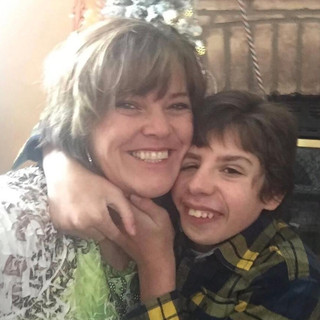
I consider myself a lifelong student, because the world is vast, layered, and endlessly humbling. There is simply too much to learn to ever arrive. And the longer I live—especially alongside my son—the more convinced I become that the courage to say “I don’t know” is one of the highest forms of intelligence there is.
Jay lives in a world where very little is automatic.
His learning is lived.
Embodied.
Observed.
Earned.
And walking beside him has completely reshaped what I believe intelligence actually is.
Because there are people who function easily in the world—and yet never truly meet it.
They borrow explanations.
They inherit opinions.
They collect certainty like it’s a personality trait.
They sound knowledgeable.
They appear confident.
But they are not living their intelligence.
They are reciting it.
Lived intelligence is different.
Lived intelligence asks questions even when it would be more comfortable to pretend.
It keeps moving when there are no neat answers.
It allows experience to reorganize the self.
Lived intelligence is what happens when a person is willing to be a beginner again.
And again.
And again.
If I weren’t open, my son’s world would already be smaller.
If I needed to appear certain, I wouldn’t ask.
If I didn’t ask, I wouldn’t find.
And if I didn’t find—nothing would change.
Many of the answers I’ve found for Jay have not come from offices.
They’ve come from conversations.
From therapists who are paying attention.
From parents who are living this.
From people willing to say, “I don’t know… but I’ve seen this. And this helped. And here’s who you should talk to next.”
And a LOT of it comes from my own research.
Recently, because I asked, I was given a number.
A shared diagnosis.
A path someone else is already walking.
That is how real knowledge moves.
Not top-down.
Hand-to-hand.
Parent to parent.
Caregiver to caregiver.
Life to life.
And it isn’t just me.
Many parents of disabled adults live in this same space. We are the ones making the calls, tracking patterns, comparing notes, and looking for answers long after the appointments end. Sometimes we are navigating systems that lag behind real life—so we build our own networks.
Because when formal structures don’t see the full picture yet, lived communities often do.
And this is where lived intelligence becomes more than a personal value.
It becomes a form of advocacy.
A way of refusing stagnation.
A way of protecting our children.
A way of insisting that their lives deserve curiosity, effort, and evolution—not dismissal.
When I look at Jay—at the way he navigates his world, the way he responds, the way he experiences—I don’t see someone lacking intelligence.
I see someone practicing it.
Moment by moment.
Nervous system.
Relationship.
Trust and trial.
Observation and repair.
Years ago, when I completed coursework through Glenn Doman’s program, one statement stayed with me:
“There is no correlation between brain injury and intelligence, but there is a staggering relationship between brain injury and the ability to express intelligence.”
That distinction matters.
Because what the world often measures is output.
Speed.
Speech.
Conventional milestones.
But intelligence is not limited to how quickly or neatly it is expressed.
Sometimes it is processing quietly.
Sometimes it is reorganizing.
Sometimes it is waiting for the right bridge.
Expression can be interrupted.
Intelligence itself is not so fragile.
There is a kind of disability that affects function.
And there is a kind that affects awareness.
One can be supported.
The other resists support entirely.
Because a closed mind cannot be helped.
It can only be defended.
Jay has never had the luxury of pretending.
So he lives.
And in living, he learns.
He has taught me that intelligence is not what you know.
It is how willing you are to meet what you don’t.
And courage is not found in having answers.
It lives in staying open.
And I am deeply thankful that I am secure enough in who I am to admit when I don’t know—and strong enough to never place ego over true knowledge.
I don’t measure intelligence by what someone claims to know,
but by how willing they are to meet what they don’t.
— Penny
Jay’s House of Blues - Real life with special needs
If you're walking a similar path or just want to follow along with Jeremiah's journey, I share more in real-time here: facebook.com/JaysHouseofBlues


Comments